Mexican Coins and Medallions from the National Coin Collection
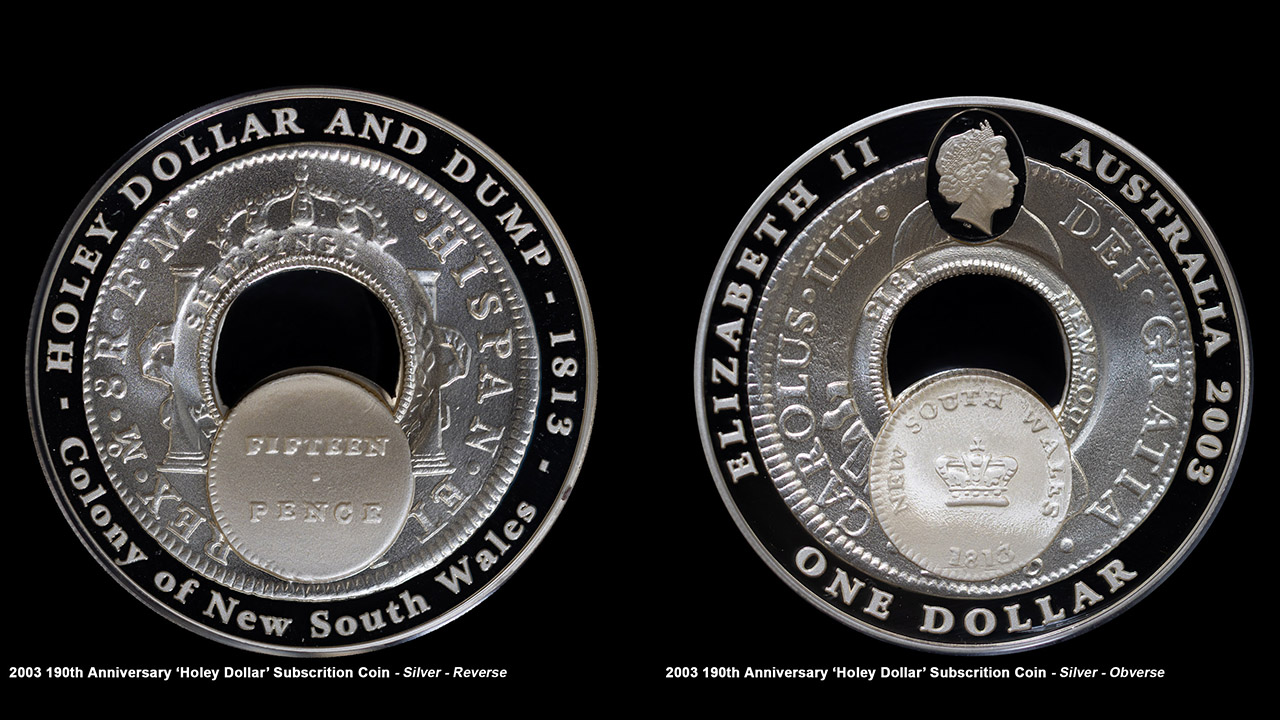
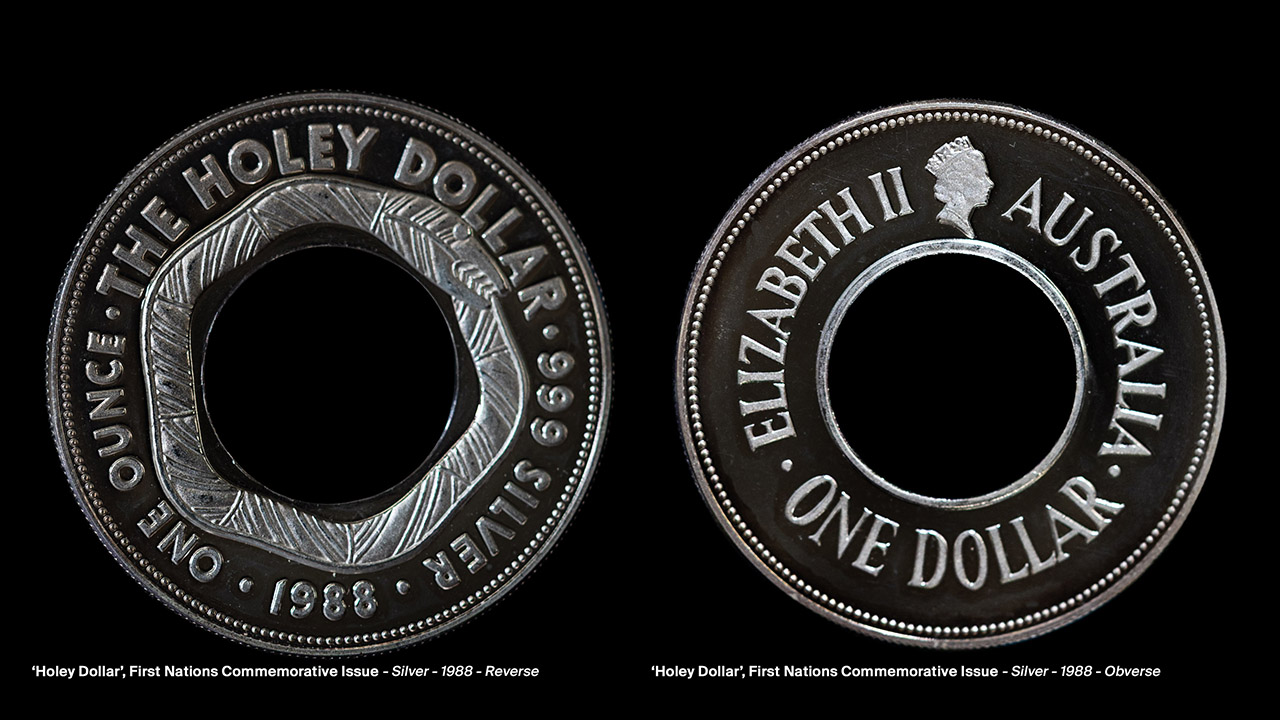
In 2026, Australia and Mexico celebrate 60 years of diplomatic relations - a partnership built on cooperation, culture and shared outlooks. Yet the connection between these two nations reaches back far deeper in time. More than 200 years earlier, Spanish silver dollars struck in colonial Mexican mints travelled vast ocean trade routes to the fledgling colony of New South Wales. Faced with a critical shortage of currency, Governor Lachlan Macquarie authorised their transformation into Australia’s first distinctive coins: the Holey Dollar and Dump. By punching out their centres, these global coins were ingeniously remade to serve a new economy.
Today, this remarkable story of adaptation and exchange highlights an enduring link between Australia and Mexico - one forged not only through diplomacy, but through shared history, resourcefulness and the enduring legacy of our coin origins.
Take a closer look below at some of the beautiful Mexican coins and related significant pieces that are part of the National Coin Collection housed here at the Royal Australian Mint.
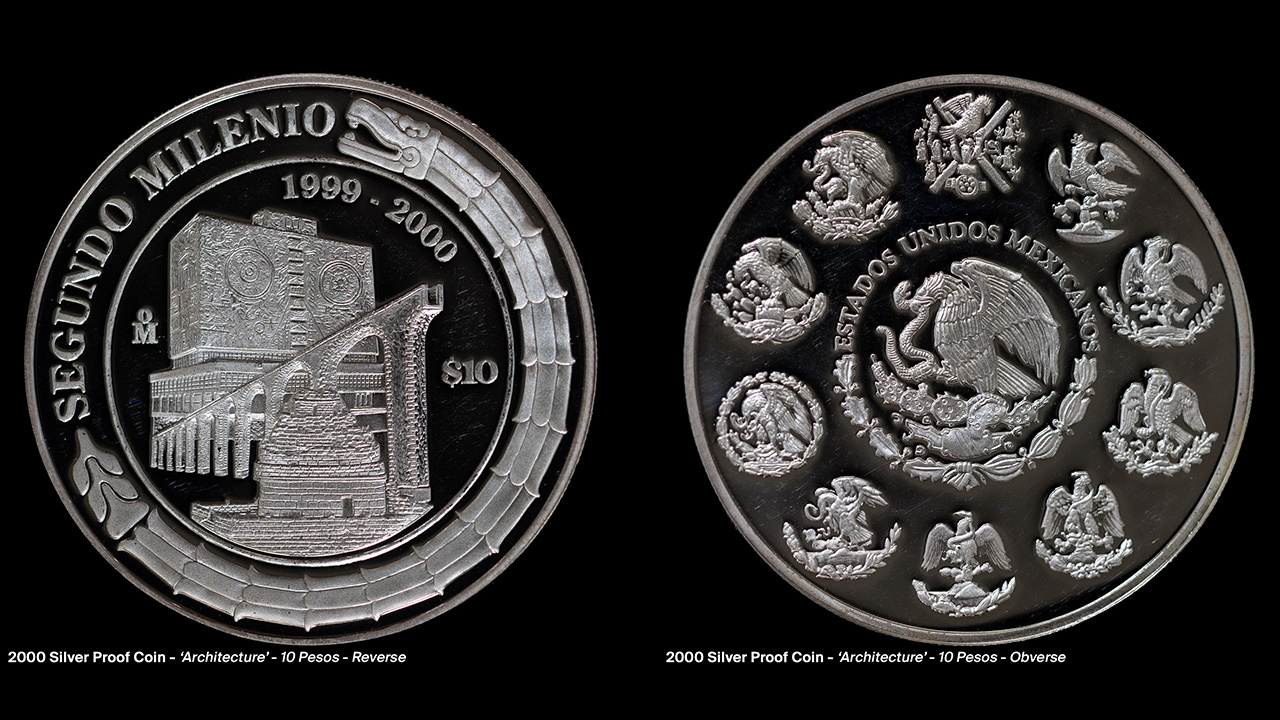
2000 10 Peso Silver Proof Coin
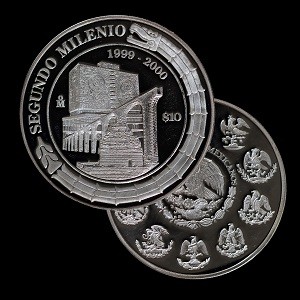
This design highlights three phenomenal architectural landmarks in Mexico.
Firstly, in the background, you can see the UNAM Central Library. This 10-floor building was designed by renowned architect Juan O’Gorman, as was the world-famous four-sided mosaic that covers the building’s façade, titled ‘Historical Representation of Culture’. Each side of the mosaic is a homage to an era of Mexican history: the north depicts the pre-Hispanic period; the south, the colonial period; the east wall, the modern era; and the west wall, the history of the university on which it stands.
The building was officially opened in 1956, with an impressive opening collection of around 80,000 volumes. Today, the UNAM Central Library is home to around 1.5 million volumes including books, thesis papers and manuscripts. In 2007, UNESCO proclaimed the Central Library along with the rest of the Ciudad Universitaria Campus as World Heritage sites.
The second architectural feature of this coin is the Aqueduct of Querétaro, pictured here running elegantly across the midground of the design. The Aqueduct is over 1,280 metres long, with 74 giant arches, the tallest of which is an impressive 28.5 metres high. Built over the course of more than a decade, this marvel of construction was responsible for delivering clean water to the growing town of Santiago de Querétaro for centuries, and today still stands as a monument to the ingenuity and innovation of colonial-era engineering.
The third and final landmark featured is the El Caracol, or the Chichen Itza Observatory. This is an ancient ruin from the days of the Mayan Civilization – an empire that can be traced back over 3,000 years. It is believed that this structure was used by Maya priests to observe the stars, with a strong focus on tracking the celestial movements of Venus – an exceptionally important being in ancient Mayan culture
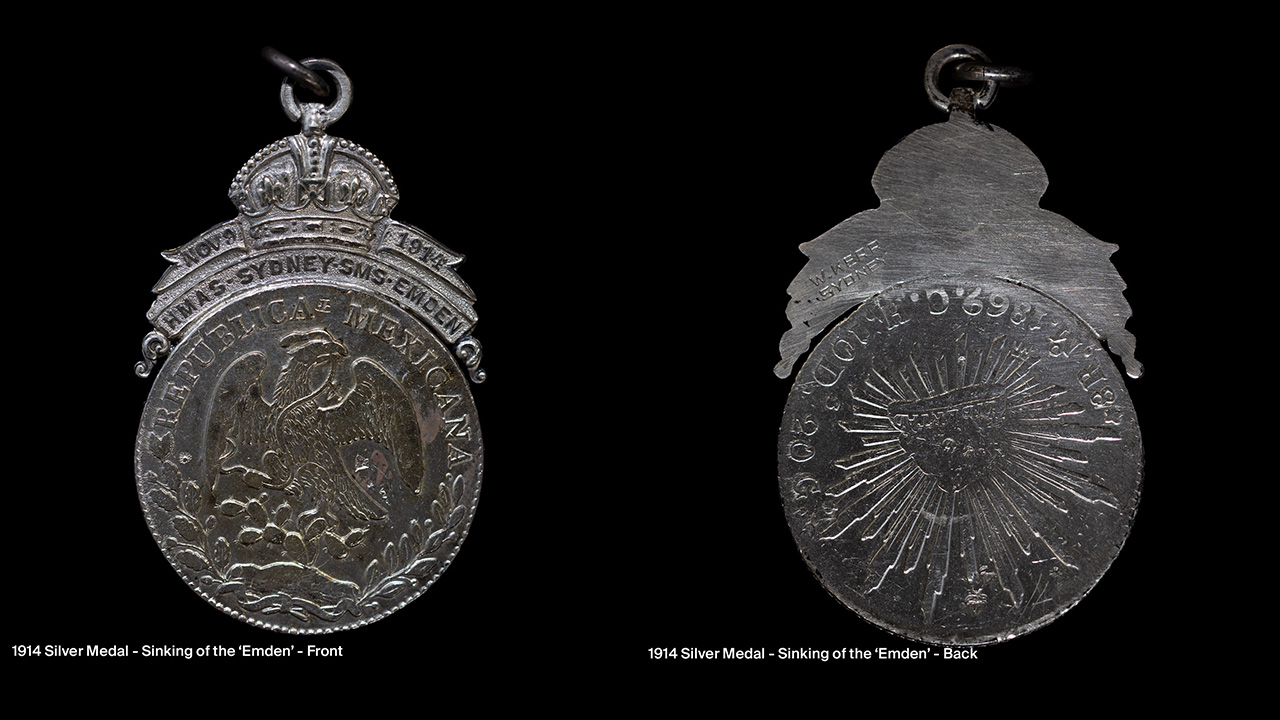
1914 Silver Medal – Sinking of the ‘Emden’
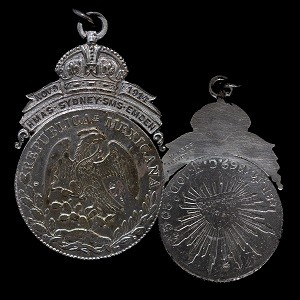
On 9 November 1914, during the First World War, the Royal Australian Navy (RAN) ship HMAS Sydney destroyed the German ship SMS Emden off the coast of the Cocos (Keeling) Islands. This was the Royal Australian Navy’s first naval engagement and resulted in the Emden being run aground and ravaged by gunfire. Casualties were incurred on both sides; the Sydney lost 4 crew members while the Emden lost 131.
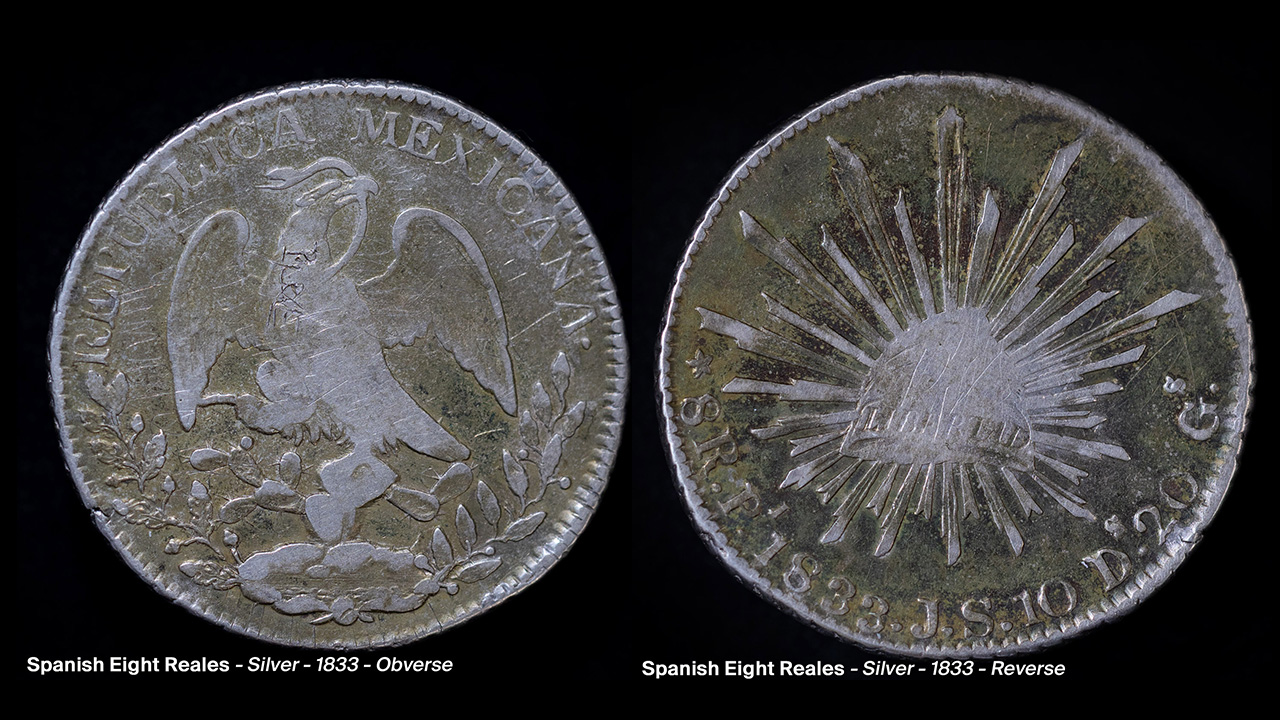
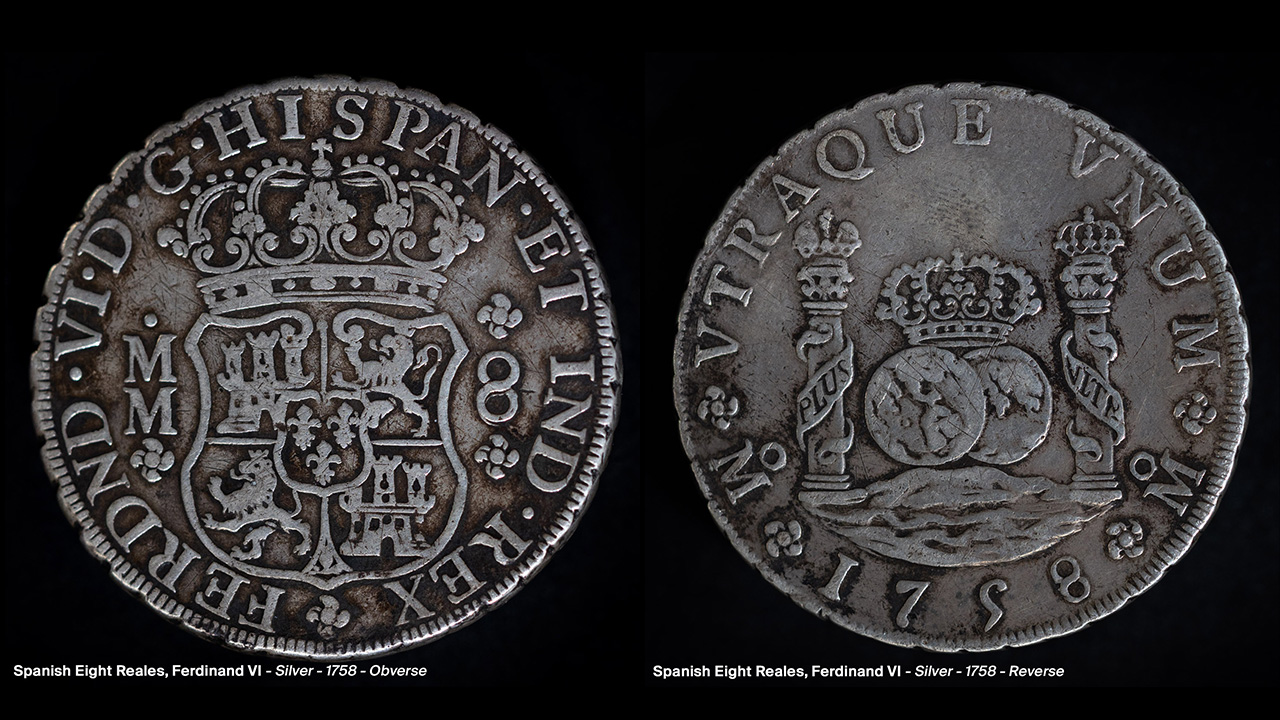
Following the stranding of the Emden, salvage operations were undertaken to recover any resources aboard. Two safes were found, containing 6,429 Mexican silver coins – mostly Mexican 8 Reale pieces, which were the most popular international trade currency at the time throughout the East Indies and the coast of China. One thousand of these coins were mounted as commemorative medallions in 1918 by Sydney based jeweller and silversmith W. Kerr and presented to all officers aboard the HMAS Sydney at the time of the battle. Some medallions were also presented to other relevant officials, staff and organisations, and a small number were sold to the public. The remaining coins were then melted down at the Sydney Mint to raise funds for the RAN Relief Fund.
Although an unofficial medallion and as such not formally recognised by the Australian Honours and Awards system, the Kerr ‘Sydney-Emden’ medal is a historically significant Australian Naval piece and holds a unique place in our nation’s naval history.
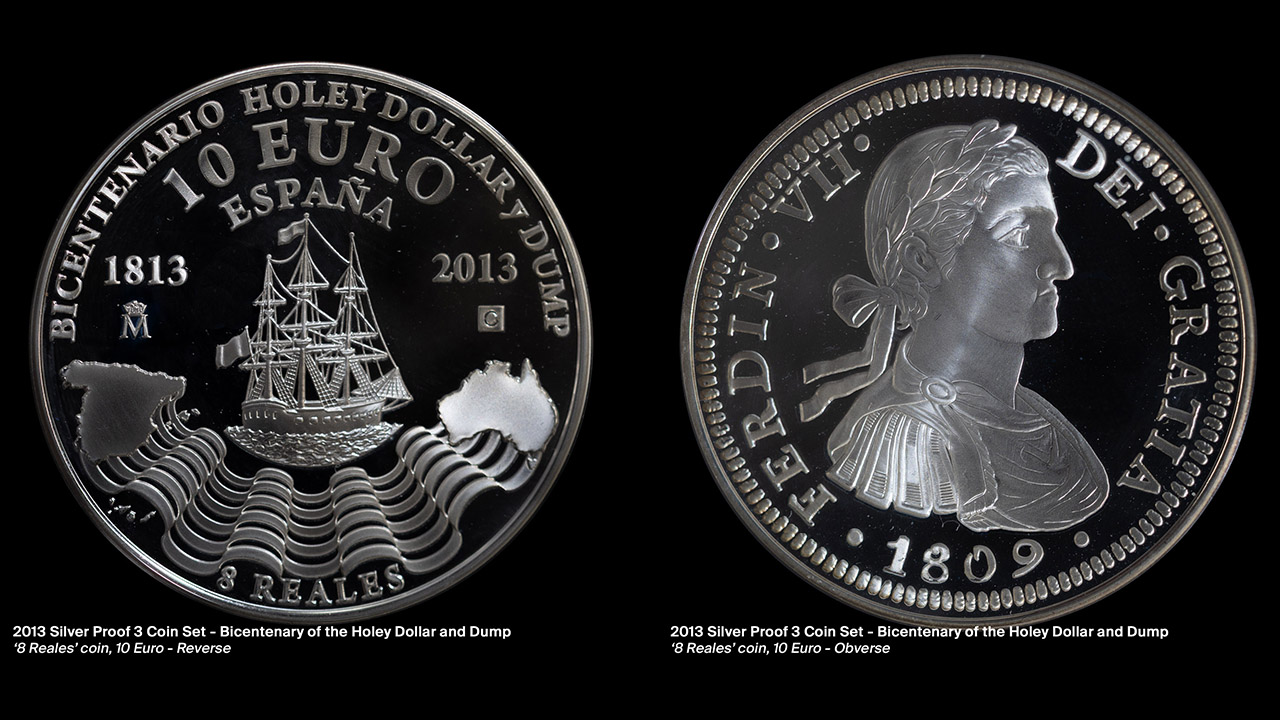
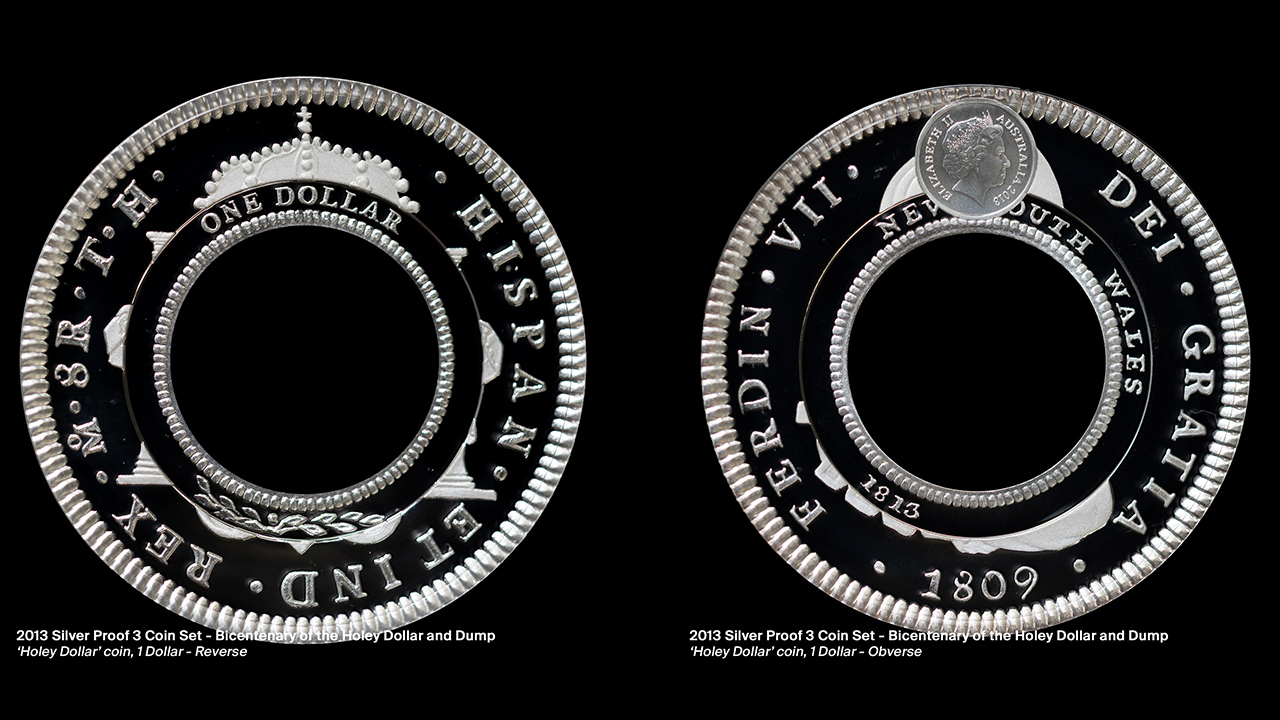
2013 3-Coin Silver Proof Set - Bicentenary of the Holey Dollar and Dump
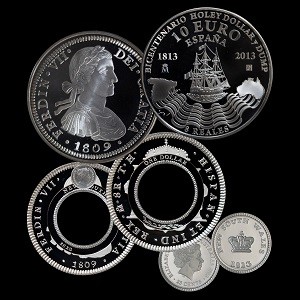
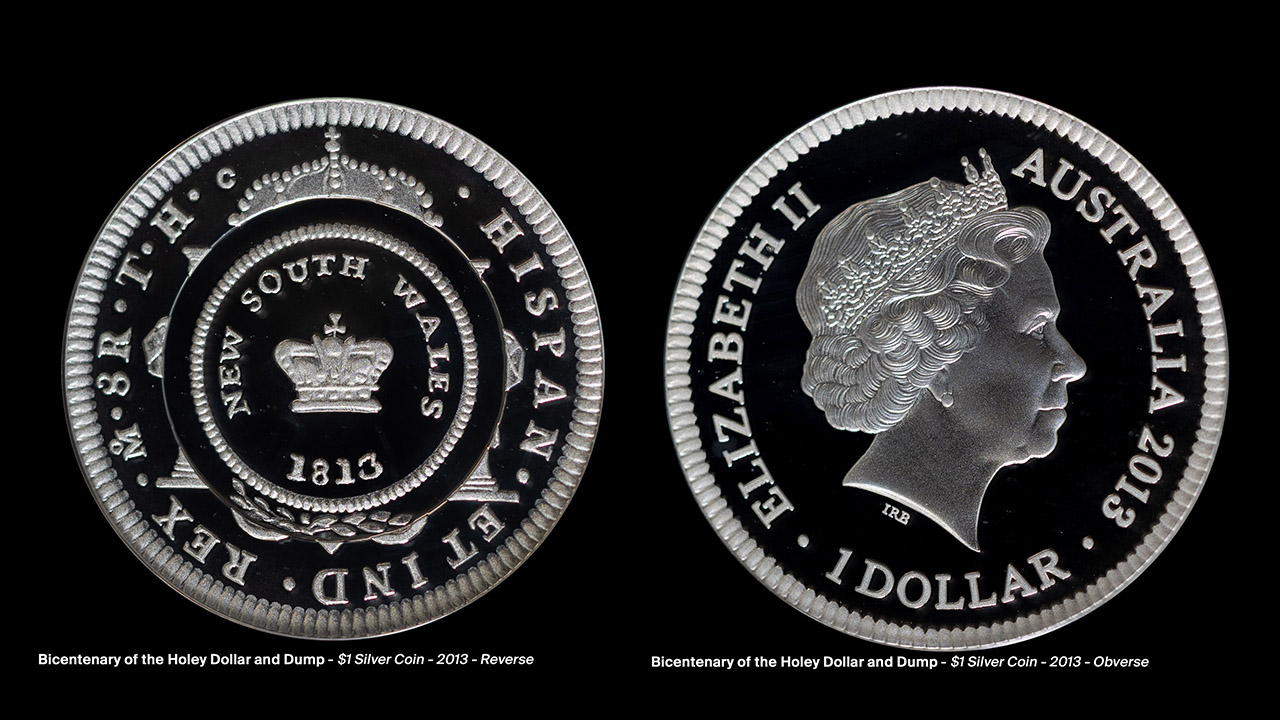
In 2013, the Royal Australian Mint partnered with the Royal Mint of Madrid (Real Casa de la Moneda de Madrid) to celebrate the bicentenary of Australia’s first official currency – the Holey Dollar and Dump – with the release of a silver proof 3-coin set.
The set features an 8 Reales coin with a face value of 10 Euro. The obverse of this coin is a reproduction of an original Piece of Eight – a portrait of Fernando VII, as struck in 1809. The reverse design depicts a large ship, symbolic of the ship that first bore the coins that would become Holey Dollars to Australian shores. It also features both the Spanish and Australian mintmarks, along with the silhouettes of Spain and Australia’s maps, connected by a series of waves.
Next, we have the Holey Dollar – a replica of the original design on the reverse, and a reproduction of the Ferdinand VII Spanish Silver Dollar on the obverse. In addition, the 4th portrait of Her Majesty Queen Elizabeth II has been inserted at the peak of the design. This coin has a face value of 1 Dollar.
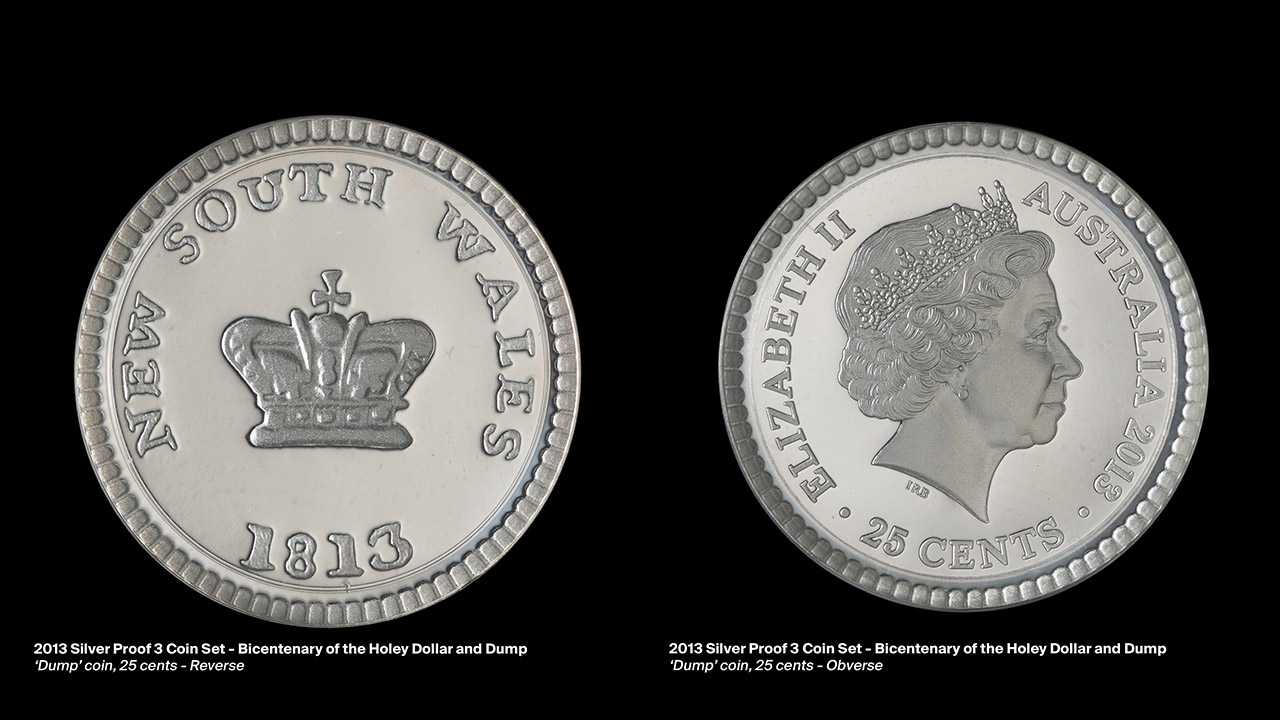
Lastly, we have the Dump. Again, the reverse is a replica of the counterstruck 1813 Silver Dump, while the obverse bears a portrait of Her Majesty Queen Elizabeth II. This coin was given a face value of 25 cents.
Gallery